Accessible first experiment
Useful when the goal is visible tone/texture support and an over-the-counter route.
Acne, inflammatory rosacea lesions and uneven pigmentation are different jobs. Compare the evidence, vehicle, tolerance and access attached to 10%, 15% and 20%.
Useful when the goal is visible tone/texture support and an over-the-counter route.
US gel labelling supports inflammatory rosacea lesions; access differs globally.
Used for acne or pigment indications in some markets. Verify the exact local product label.
A well-tolerated 10% used consistently may be more useful than a stronger formula that pills, stings or is used sporadically. Different vehicles can change usability and drug delivery, so percentages alone are not a head-to-head efficacy ranking.
Regulatory status must be checked in the reader’s country.
Post-inflammatory hyperpigmentation is especially persistent in darker skin tones. The highest-value plan is not just “brightening”: reduce new acne and irritation, use consistent photoprotection, then add one tolerable pigment-directed treatment. An aggressive routine can create more inflammation and more pigment.
Ongoing acne keeps creating new marks. Treating marks alone leaves the cause active.
UV—and for some pigment concerns visible light—can increase contrast and persistence.
Track tolerance and progress before stacking retinoids, acids and brighteners.
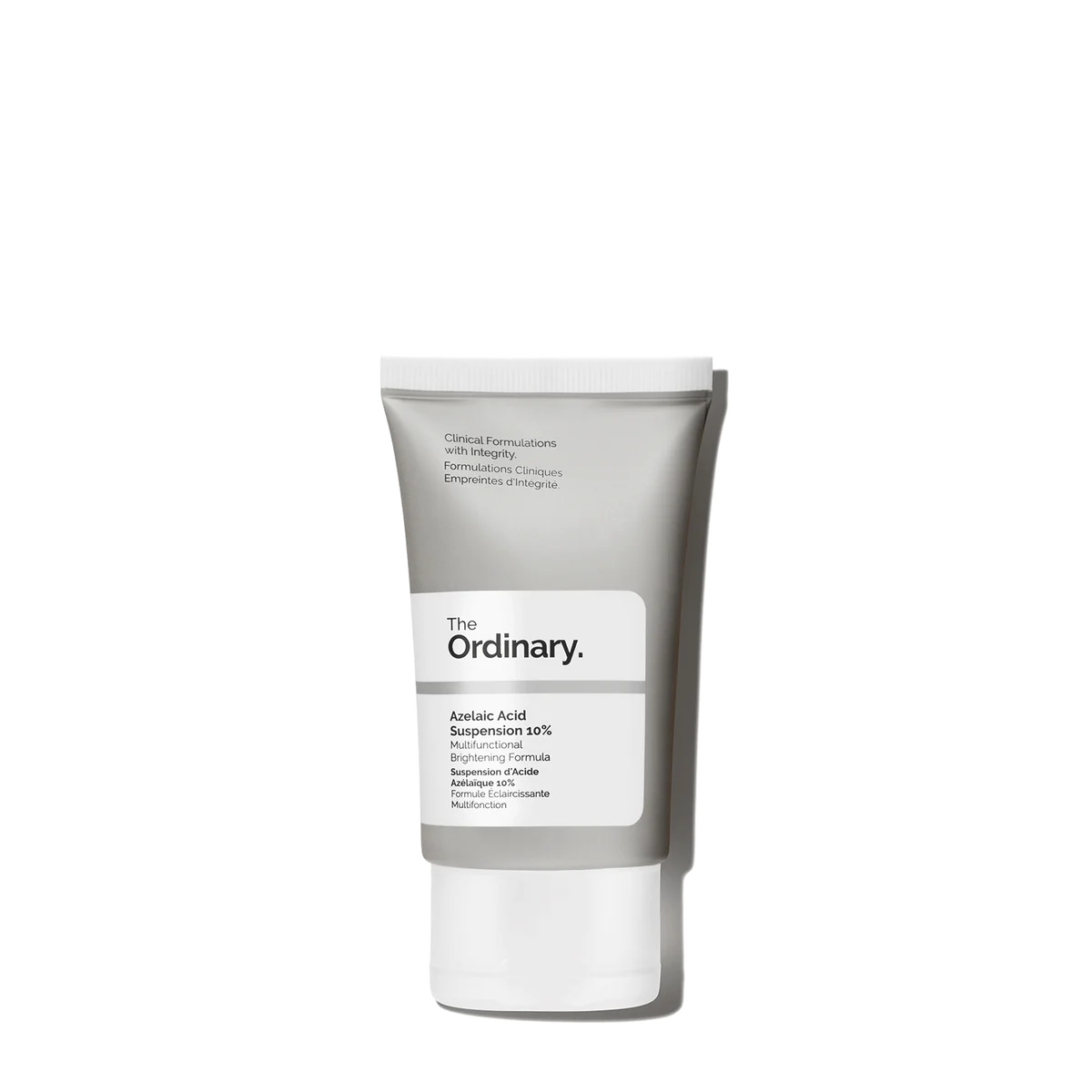
A silicone-rich suspension with 10% azelaic acid. Best for readers who understand that texture and layering—not only the active—determine adherence.
The brand targets visible texture, dullness, redness appearance and uneven tone. Do not rewrite those cosmetic claims as treatment of rosacea or acne.
View official product →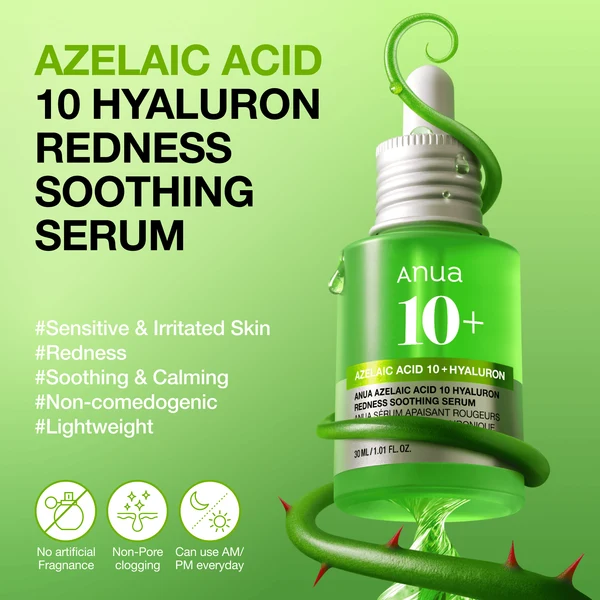
A lighter water-based 10% formula with panthenol, betaine salicylate, niacinamide, cica components, squalane, zinc PCA and ceramide NP.
Anua describes the serum as lightweight, non-comedogenic and low-irritation tested, and advises starting 1–2 times weekly. These are brand formula claims/testing—not evidence that a cosmetic serum treats diagnosed acne or rosacea.
View official product →Decision: choose The Ordinary when you accept a silicone-rich cream suspension and want the simpler formula. Choose Anua when a light serum and supportive multi-active formula better fit your routine. Because Anua also contains betaine salicylate and niacinamide, it is not a clean one-variable azelaic-acid experiment.
A thin layer is easier to spread and less likely to roll under other silicone-rich products.
Apply to dry skin and avoid rubbing repeatedly once the suspension begins to set.
If stinging persists, lower frequency or separate irritating products. Stop with significant irritation.
Compatibility guidance varies by finished formula. Follow the product manufacturer; do not turn one brand’s layering instructions into a universal chemistry rule.
Start from the diagnosis and goal. Diagnosed rosacea or acne warrants professional guidance; a cosmetic tone/texture experiment is a different decision.
The ingredient is used for pigment concerns, but any irritating routine can provoke more inflammation. Reduce frequency or stop if irritation develops.
Some regimens do, but tolerance and finished-product guidance matter. Introduce changes separately and follow your prescriber or manufacturer.
Clinical studies generally run for weeks, not days. Avoid escalating rapidly because immediate change is absent.
Name the job before choosing the percentage.
Prescription status and indications differ by country. Seek qualified care for diagnosis and medicine selection.
The current button leads to an official non-affiliate product page. Affiliate options require exact retailer verification.